Showing posts with label Tehuti. Show all posts

Serpent Power

Serpent Power


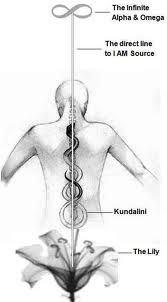
Kemetic Name for Chakras     Words of Power      Location                     Element         
  1. sefket                                Lam                  base of spine                 Earth               
  2. tekh                                  Vam                  reproductive organs      Water              
  3. ab                                     Ram                  solar plexus                   Fire                         
  4. kheper                              Yam                  heart/glandular body      Air               
  5. sekhem                             Ham                  throat                            Ether                
  6. mer                                   Om                   pineal gland                 Cosmic Mind
  7. ikh                                                           crown of head
 Animal
  1. elephant
  2. crocodile
  3. ram
  4. antelope
  5. celestrial elephant


  6.  


Neferkaptah and the Book of Thoth


Ahura was the wife of Nefer-ka-ptah, and their child was Merab; this was the name by which he
was registered by the scribes in the House of Life. And Nefer-ka-ptah, though he was the son of
the King, cared for naught on earth but to read the ancient records, written on papyrus in the
House of Life or engraved on stone in the temples; all day and every day he studied the writings
of the ancestors.
One day he went into the temple to pray to the gods, but when he saw the inscriptions on the
walls he began to read them; and he forgot to pray, he forgot the gods, he forgot the priests, he
forgot all that was around him until he heard laughter behind him. He looked round and a priest
stood there, and from him came the laughter.
"Why laughest thou at me?" said Nefer-ka-ptah.
"Because thou readest these worthless writings," answered the priest. "If thou would readest
writings that are worth the reading I can tell thee where the Book of Thoth lies hidden."
Then Nefer-ka-ptah was eager in his questions, and the priest replied, "Thoth wrote the Book
with his own hand, and in it is all the magic in the world. If thou readest the first page, thou wilt
enchant the sky, the earth, the abyss, the mountains, and the sea; thou wilt understand the
language of the birds of the air, and thou wilt know what the creeping things of earth are saying,
and thou wilt see the fishes from the darkest depths of the sea. And if thou read the other page,
even though thou wert dead and in the world of ghosts, thou could come back to earth in the
form thou once had. And besides this, thou wilt see the sun shining in the sky with the full moon
and the stars, and thou wilt behold the great shapes of the gods."
Then said Nefer-ka-ptah, "By the life of Pharaoh, that Book shall be mine. Tell me whatsoever it
is that thou desires, and I will do it for thee."
"Provide for my funeral," said the priest. "See that I am buried as a rich man, with priests and
mourning women, offerings, libations, and incense. Then shall my soul rest in peace in the fields
of Aalu. One hundred pieces of silver must be spent upon my burying."
Then Nefer-ka-ptah sent a fleet messenger to fetch the money, and he paid one hundred pieces of
silver into the priest's hands. When the priest had taken the silver, he said to Nefer-ka-ptah:
"The Book is at Koptos in the middle of the river.
In the middle of the river is an iron box,
In the iron box is a bronze box,
In the bronze box is a keté-wood box,
In the keté-wood box is an ivory-and-ebony box,
In the ivory-and-ebony box is a silver box,
In the silver box is a gold box,
And in the gold box is the Book of Thoth,
Round about the great iron box are snakes and scorpions and all manner of crawling things, and
above all there is a snake which no man can kill. These are set to guard the Book of Thoth."
When the priest had finished speaking, Nefer-ka-ptah ran out of the temple, for his joy was so
great that he knew not where he was. He ran quickly to Ahura to tell her about the Book and that
he would go to Koptos and find it.
But Ahura was very sorrowful, and said, "Go not on this journey, for trouble and grief await thee
in the southern land."
She laid her hand upon Nefer-ka-ptah as though she would hold him back from the sorrow that
awaited him. But he would not be restrained, and broke away from her and went to the king his
father.
He told the King all that he had learned, and said, "Give me the royal barge, O my father, that I
may go to the southern land with my wife Ahura and my son Merab. For the Book of Thoth I
must and will have."
So the King gave orders and the royal barge was prepared, and in it Nefer-ka-ptah, Ahura, and
Merab sailed up the river to the southern land as far as Koptos. When they arrived at Koptos, the
high priest and all the priests of Isis of Koptos came down to the river to welcome Nefer-ka-ptah,
sacrificed an ox and a goose, and poured a libation of wine to Isis of Koptos and her son
Harpocrates. After this, the priests of Isis and their wives made a great feast for four days in
honor of Nefer-ka-ptah and Ahura.
On the morning of the fifth day, Nefer-ka-ptah called to him a priest of Isis, a great magician
learned in all the mysteries of the gods. And together they made a little magic box, like the cabin
of a boat, and they made men and a great store of tackle, and put the men and the tackle in the
magic cabin. Then they uttered a spell over the cabin, and the men breathed and were alive, and
began to use the tackle. And Nefer-ka-ptah sank the magic cabin in the river, saying "Workmen,
workmen! Work for me!" And he filled the royal barge with sand and sailed away alone, while
Ahura sat on the bank of the river at Koptos, and watched and waited, for she knew that sorrow
must come of this journey to the southern land.
The magic men in the magic cabin toiled all night and all day for three nights and three days
along the bottom of the river; and when they stopped the royal barge stopped also, and Nefer-kaptah
knew that he had arrived where the Book lay hidden.
He took the sand out of the royal barge and threw it into the water, and it made a gap in the river,
a gap of a schoenus long and a schoenus wide; in the middle of the gap lay the iron box, and
beside the box was coiled the great snake that no man can kill, and all around the box on every
side to the edge of the walls of water were snakes and scorpions and all manner of crawling
things.
Then Nefer-ka-ptah stood up in the royal barge, and across the water he cried to the snakes and
scorpions and crawling things; a loud and terrible cry, and the words were words of magic. As
soon as his voice was still, the snakes and scorpions and crawling things were still also, for they
were enchanted by means of the magical words of Nefer-ka-ptah, and they could not move.
Nefer-ka-ptah brought the royal barge to the edge of the gap, and he walked through the snakes
and scorpions and crawling things, and they looked at him, but could not move because of the
spell that was on them.
And now Nefer-ka-ptah was face to face with the snake that no man could kill, and it reared
itself up ready for battle. Nefer-ka-ptah rushed upon it and cut off its head, and at once the head
and body came together, each to each, and the snake that no man could kill was alive again, and
ready for the fray. Again Nefer-ka-ptah rushed upon it, and so hard did he strike that the head
was flung far from the body, but at once the head and body came together again, each to each,
and again the snake that no man could kill was alive and ready to fight. Then Nefer-ka-ptah saw
that the snake was immortal and could not be slain but must be overcome by subtle means. Again
he rushed upon it and cut it in two, and very quickly he put sand on each part, so that when the
head and body came together there was sand between them and they could not join, and the
snake that no man could kill lay helpless before him.
Then Nefer-ka-ptah went to the great box where it stood in the gap in the middle of the river, and
the snakes and scorpions and crawling things watched, but they could not stop him.
He opened the iron box and found a bronze box,
He opened the bronze box and found a keté-wood box,
He opened the keté-wood box and found an ivory-and-ebony box,
He opened the ivory-and-ebony box and found a silver box,
He opened the silver box and found a gold box,
He opened the gold box and found the Book of Thoth.
He opened the Book and read a page, and at once he had enchanted the sky, the earth, the abyss,
the mountains, and the sea, and he understood the language of birds, fish, and beasts. He read the
second page and he saw the sun shining in the sky, with the full moon and the stars, and he saw
the great shapes of the gods themselves; and so strong was the magic that the fishes came up
from the darkest depths of the sea. So he knew that what the priest had told him was true.
Then he thought of Ahura waiting for him at Koptos, and he cast a magic spell upon the men that
he had made, saying, "Workmen, workmen! Work for me and take me back to the place from
which I came!" They toiled day and night till they came to Koptos, and there was Ahura sitting
by the river, having eaten nothing and drunk nothing since Nefer-ka-ptah went away. For she sat
waiting and watching for the sorrow that was to come upon them.
But when she saw Nefer-ka-ptah returning in the royal-barge, her heart was glad and she rejoiced
exceedingly. Nefer-ka-ptah came to her and put the Book of Thoth into her hands and bade her
read it. When she read the first page, she enchanted the sky, the earth, the abyss, the mountains,
and the sea, and she understood the language of birds, fish, and beasts; and when she read the
second page, she saw the sun shining in the sky, with the full moon and the stars, and she saw the
great shapes of the gods themselves; and so strong was the magic that the fishes came up from
the darkest depths of the sea.
Nefer-ka-ptah now called for a piece of new papyrus and for a cup of beer; and on the papyrus he
wrote all the spells that were in the Book of Thoth. Then he took the cup of beer and washed the
papyrus in the beer, so that all the ink was washed off and the papyrus became as though it had
never been written on. And Nefer-ka-ptah drank the beer, and at once he knew all the spells that
had been written on the papyrus, for this is the method of the great magicians.
Then Nefer-ka-ptah and Ahura went to the temple of Isis and gave offerings to Isis and
Harpocrates, and made a great feast, and the next day they went on board the royal barge and
sailed joyfully away down the river towards the northern land.
But behold, Thoth had discovered the loss of his Book, and Thoth raged like a panther of the
south, and he hastened before Ra and told him all, saving, "Nefer-ka-ptah has found my magic
box and opened it, and has stolen my Book, even the Book of Thoth; he slew the guards that
surrounded it, and the snake that no man can kill lay helpless before him. Avenge me, O Ra,
upon Nefer-ka-ptah, son of the King of Egypt."
The majesty of Ra answered and said, "Take him and his wife and his child, and do with them as
thou wilt." And now the sorrow for which Ahura watched and waited was about to come upon
them, for Thoth took with him a power from Ra to give him his desire upon the stealer of his
Book.
As the royal barge sailed smoothly down the river, the little boy Merab ran out from the shade of
the awning and leaned over the side watching the water. And the power of Ra drew him, so that
he fell into the river and was drowned. When he fell, all the sailors on the royal barge and all the
people walking on the river bank raised a great cry, but they could not save him. Nefer-ka-ptah
came out of the cabin and read a magical spell over the water, and the body of Merab came to the
surface and they brought it on board the royal barge. Then Nefer-ka-ptah read another spell, and
so great was its power that the dead child spoke and told Nefer-ka-ptah all that had happened
among the gods, that Thoth was seeking vengeance, and that Ra had granted him his desire upon
the stealer of his Book.
Nefer-ka-ptah gave command, and the royal barge returned to Koptos, that Merab might be
buried there with the honor due to the son of a prince. When the funeral ceremonies were over,
the royal barge sailed down the river toward the northern land. A joyful journey was it no longer,
for Merab was dead, and Ahura's heart was heavy on account of the sorrow that was still to
come, for the vengeance of Thoth was not yet fulfilled.
They reached the place where Merab had fallen into the water, and Ahura came out from under
the shade of the awning, and she leaned over the side of the barge, and the power of Ra drew her
so that she fell into the river and was drowned. When she fell, all the sailors in the royal barge
and all the people walking on the river-bank raised a great cry, but they could not save her.
Nefer-ka-ptah came out of the cabin and read a magical spell over the water, and the body of
Ahura came to the surface, and they brought it on board the royal barge. Then Nefer-ka-ptah read
another spell and so great was its power that the dead woman spoke and told Nefer-ka-ptah all
that had happened among the gods, that Thoth was still seeking vengeance, and that Ra had
granted him his desire upon the stealer of his Book.
Nefer-ka-ptah gave command and the royal barge returned to Koptos, that Ahura might be buried
there with the honor due to the daughter of a king. When the funeral ceremonies were over, the
royal barge sailed down the river towards the northern land. A sorrowful journey was it now, for
Ahura and Merab were dead, and the vengeance of Thoth was not yet fulfilled.
They reached the place where Ahura and Merab had fallen into the water, and Nefer-ka-ptah felt
the power of Ra drawing him. Though he struggled against it he knew that it would conquer him.
He took a piece of royal linen, fine and strong, and made it into a girdle, and with it he bound the
Book of Thoth firmly to his breast, for he was resolved that Thoth should never have his Book
again.
Then the power drew him yet more strongly, and he came from under the shade of the awning
and threw himself into the river and was drowned. When he fell, all the sailors of the royal barge
and all the people walking on the river-bank raised a great cry, but they could not save him. And
when they looked for his body they could not find it. So the royal barge sailed down the river till
they reached the northern land and came to Memphis, and the chiefs of the royal barge went to
the king and told him all that had happened.
The king put on mourning raiment; he and his courtiers, the high priest and all the priests of
Memphis, the king's army and the king's household, were clothed in mourning apparel, and they
walked in procession to the haven of Memphis to the royal barge. When they came to the haven,
they saw the body of Nefer-ka-ptah floating in the water beside the barge, close to the great
steering-oars. And this marvel came to pass because of the magical powers of Nefer-ka-ptah;
even in death he was a great magician by reason of the spells he had washed off the papyrus and
drunk in the beer.
Then they drew him out of the water, and they saw the Book of Thoth bound to his breast with
the girdle of royal linen. And the king gave command that they should bury Nefer-ka-ptah with
the honor due to the son of a king, and that the Book of Thoth should be buried with him.
Thus was the vengeance of Thoth fulfilled, but the Book remained with Nefer-ka-ptah.

THE END
Ascending , Descending

 
      READMORE
       

      The vison of Tehuti(Hermes)

      ONE day, Hermes, after reflecting on the origin of things, fell asleep. A dull torpor took possession of his body; but in proportion as the latter grew benumbed, his spirit ascended into space. Then an immense being, of indeterminate form, seemed to call him by name.
      "Who art thou?" said the terrified Hermes.
      "I am Osiris, the sovereign Intelligence who is able to unveil all things. What desirest thou?"
      "To behold the source of beings, O divine Osiris, and to know God."
      "Thou shalt be satisfied."
      Immediately Hermes felt himself plunged in a delicious light. In its pellucid billows passed the ravishing forms of all beings. Suddenly, a terrifying encircling darkness descended upon him.
      Hermes was in a humid chaos, filled with smoke and with a heavy, rumbling sound. Then a voice rose from the abyss, the cry of light. At once a quick-leaping flame darted forth from the humid depths, reaching to the ethereal heights. Hermes ascended with it, and found himself again in the expanse of space. Order began to clear up chaos in the abyss; choruses of constellations spread above his head and the voice of light filled infinity.
      "Dost thou understand what thou hast seen?" said Osiris to Hermes, bound down in his dream and suspended between earth and sky.
      "No," said Hermes.
      "Thou wilt now learn. Thou hast just seen what exists from all eternity. The light thou didst first see is the divine intelligence which contains all things in potentiality, enclosing the models of all beings. The darkness in which thou wast afterwards plunged is the material world on which the men of earth live. But the fire thou didst behold shooting forth from the depths, is the divine Word. God is the Father, the Word is the son, and their union is Life."
      "What marvellous sense has opened out to me?" asked Hermes. "I no longer see with the eyes of the body, but with those of the spirit. How has that come to pass?"
      "Child of dust," replied Osiris, "it is because the Word is in thee. That in thee which hears, sees, and acts is the Word itself, the sacred fire, the creative utterance!"
      "Since things are so," said Hermes, "grant that I may see the light of the worlds; the path of souls from which man comes and to which he returns."
      "Be it done according to thy desire."
      Hermes became heavier than a stone and fell through space like a meteorite. Finally he reached the summit of a mountain. It was night, the earth was gloomy and deserted, and his limbs seemed as heavy as iron.
      "Raise thine eyes and look!" said the voice of Osiris.
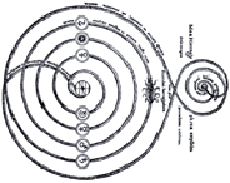
      Then Hermes saw a wonderful sight. The starry heavens, stretching through infinite space, enveloped him with seven luminous spheres. In one glance, Hermes saw the seven heavens stretching above his head, tier upon tier, like seven transparent and concentric globes, the sidereal centre of which he now occupied. The milky way formed the girdle of the last. In each sphere there rolled a planet accompanied by a genius of different form, sign and light. Whilst Hermes, dazzled by the sight, was contemplating their wide-spread efflorescence and majestic movements, the voice said to him:
      "Look, listen, and understand. Thou seest the seven spheres of all life. Through them is accomplished the fall and ascent of souls. The seven genii are the seven rays of the word-light. Each of them commands one sphere of the spirit, one phase of the life of souls. The one nearest to thee is the Genius of the Moon, with his disquieting smile and crown of silver sickle. He presides over births and deaths, sets free souls from bodies and draws them into his ray. Above him, pale Mercury points out the path to ascending or descending souls with his caduceus, which contains all knowledge. Higher still, shining Venus holds the mirror of love, in which souls forget and recognize them in turn. Above her, the Genius of the Sun raises the triumphal torch of eternal beauty. At a yet loftier height, Mars brandishes the sword of justice. Enthroned on the azure sphere, Jupiter holds the sceptre of supreme power, which is divine intelligence. At the
      boundaries of the world, beneath the signs of the Zodiac, Saturn bears the globe of universal wisdom. 2
      "I see," said Hermes, "the seven regions which comprise the visible and invisible world; I see the seven rays of the word-light, of the one God who traverses them and governs them by these rays. Still, O master, how does mankind journey through all these worlds?"
      "Dost thou see," said Osiris, "a luminous seed fall from the regions of the milky way into the seventh sphere? These are germs of souls. They live like faint vapors in the region of Saturn, gay and free from care, knowing not their own happiness. On falling from sphere to sphere, however, they put on increasingly heavier envelopes. In each incarnation they acquire a new corporeal sense, in harmony with the surroundings in which they are living. Their vital energy increases, but in proportion as they enter into denser bodies they lose the memory of their celestial origin. Thus is effected the fall of souls which come from the divine ether. Ever more and more captivated by matter and intoxicated by life, they fling themselves like a rain of fire, with quiverings of voluptuous delight, through the regions of grief, love, and death, right into their earthly prison where thou thyself lamentest, held down by the fiery centre of the earth, and where divine life appears to thee nothing more than an empty dream."
      "Can souls die?" asked Hermes.
      "Yes," replied the voice of Osiris, "many perish in the fatal descent. The soul is the daughter of heaven, and its journey is a test. If it loses the memory of its origin, in its unbridled love of matter, the divine spark which was in it and which might have become more brilliant than a star, returns to the ethereal region, a lifeless atom, and the soul disaggregates in the vortex of gross elements."
      Hermes shuddered at these words, for a raging tempest enveloped him in a black mist. The seven spheres disappeared beneath dense vapors. In them he saw human spectres uttering strange cries, carried off and torn by phantoms of monsters and animals, amidst nameless groans and blasphemies.
      "Such is the destiny," said Osiris, "of souls irremediably base and evil. Their torture finishes only with their destruction, which includes the loss of all consciousness. The vapors are now dispersing, the seven spheres reappear beneath the firmament. Look on this side. Do you see this swarm of souls trying to mount once more to the lunar regions? Some are beaten back to earth like eddies of birds beneath the might of the tempest. The rest with mighty wings reach the upper sphere, which draws them with it as it rotates. Once they have come to this sphere, they recover their vision of divine things. This time, however, they are not content to reflect them in the dream of a powerless happiness; they become impregnated thereby with the lucidity of a grief-enlightened consciousness, the energy of a will acquired through struggle and strife. They become luminous, for they possess the divine in themselves and radiate it in their acts. Strengthen therefore thy soul, O Hermes! calm thy darkened mind by contemplating these distant flights of souls which mount the seven spheres and are scattered about therein like sheaves of sparks. Thou also canst follow them, but a
      strong will it needs to rise. Look how they swarm and form into divine choruses. Each places itself beneath its favorite genius. The most beautiful dwell in the solar region; the most powerful rise to Saturn. Some ascend to the Father, powers themselves amidst powers. For where everything ends, everything eternally begins; and the seven spheres say together: 'Wisdom! Love! Justice! Beauty! Splendor! Knowledge! Immortality!'"
      "This," said the hierophant, "is what ancient Hermes saw and what his successors have handed down to us. The words of the wise are like the seven notes of the lyre which contains all music, along with the numbers and the laws of the universe, The vision of Hermes resembles the starry heaven, whose unfathomable depths are strewn with constellations. For the child this is nothing more than a gold-studded vault, for the sage it is boundless space in which worlds revolve, with their wonderful rhythms and cadences. The vision contains the eternal numbers, evoking signs and magic keys. The more thou learnest to contemplate and understand it, the farther thou shalt see its limits extend, for the same organic law governs all worlds."
      The prophet of the temple commented on the sacred text. He explained that the doctrine of the word-light represents divinity in the static condition, in its perfect balance. He showed its triple nature, which is at once intelligence, force, and matter; spirit, soul, and body; light, word, and life. Essence, manifestation, and substance are three terms which take each other for granted. Their union constitutes the divine and intellectual principle par excellence, the law of the ternary unity which governs creation from above downwards.
      Having thus led his disciple to the ideal centre of the universe, the generating principle of Being, the master spread him abroad in time and space in a multiple efflorescence. For a second part of the vision represents divinity in the dynamic condition, i.e., in active evolution; in other terms, the visible and invisible universe, the living heavens. The seven spheres attached to the seven planets symbolise seven principles, seven different states of matter and spirit, seven different worlds which each man and each humanity are forced to pass through in their evolution across a solar system. The seven genii or the seven cosmogonic gods signify the superior, directing spirits of all spheres, the off spring themselves of inevitable evolution. To an initiate of old, therefore, each great god was the symbol and patron of legions of spirits which reproduced his type in a thousand varieties, and which, from their own sphere, could exercise their action over mankind and terrestrial things. The seven genii of the vision of Hermes are the seven Devas of India, the seven Amshapands of Persia, the seven great Angels of Chaldæa, the seven Sephiroths of the Kabbala, the seven Archangels of the Christian Apocalypse. The great septenary which enfolds the universe does not vibrate in the seven colors of the rainbow and the seven notes of the scale, only; it also manifests itself in the constitution of man, which is triple in essence, but sevenfold in its evolution.
      "Thus," said the hierophant in conclusion, "thou hast reached the very threshold of the great arcanum. The divine life has appeared to thee beneath the phantoms of reality. Hermes has unfolded to thee the invisible heavens, the light of Osiris, the hidden God of the universe who breathes in millions of souls and animates thereby the wandering globes and working bodies. It is now thine to direct thy path and choose the road leading to the pure spirit. Henceforth dost thou belong to those who have been brought
      back from death to life. REMEMBER THAT THERE ARE TWO MAIN KEYS TO KNOWLEDGE. This is the first: 'The without is like the within of things; the small is like the large; there is only one law and he who works is One. In the divine economy, there is nothing either great or small.' And this is the second: 'Men are mortal gods and gods are immortal men.' Happy the man who understands these words, for he holds the key to all things. Remember that the law of mystery veils the great truth. Total knowledge can be revealed only to our brethren who have gone through the same trials as ourselves. Truth must be measured according to intelligence; it must be veiled from the feeble, whom it would madden, and concealed from the wicked, who are capable of seizing only its fragments, which they would turn into weapons of destruction. Keep it in thy heart and let it speak through thy work. Knowledge will be thy might, faith thy sword, and silence thy armor that cannot be broken."
      The revelations of the prophet of Amon-Râ, which opened out to the new initiate such vast horizons over himself and over the universe, doubtless produced a profound impression, when uttered from the observatory of a Theban temple, in the clear calm of an Egyptian night. The pylons, the white roofs, and terraces of the temples lay asleep at his feet between the dark clusters of nopals and tamarind trees. Away in the distance were large monolithic shrines, colossal statues of the gods, seated like incorruptible judges on their silent lake. Three pyramids, geometrical figures of the tetragram and of the sacred septenary, could be dimly seen on the horizon, their triangles clearly outlined in the light grey air. The unfathomable firmament was studded with stars. With what a strange gaze he looked at those constellations which were depicted to him as future dwellings! When finally the gold-tipped barque of the moon rose above the dark mirror of the Nile which died away on the horizon, like a long bluish serpent, the neophyte believed he saw the barque of Isis floating over the river of souls which it carries off towards the sun of Osiris. He remembered the Book of the Dead, and the meaning of all the symbols was now unveiled to his mind after what he had seen and learned; he might believe himself to be in the crepuscular kingdom of the Amenti, the mysterious interregnum between the earthly and the heavenly life, where the departed, who are at first without eyes and power of utterance, by degrees regain sight and voice. He, too, was about to undertake the great journey, the journey of the infinite, through worlds and existences. Hermes had already absolved him and judged him to be worthy. He had given him the explanation of the great enigma "One only soul, the great soul of the All, by dividing itself out, has given birth to all the souls that struggle throughout the universe." Armed with the mighty secret, he entered the barque of Isis. Rising aloft into the ether, it floated in the interstellar regions. The broad rays of a far-spreading dawn were already piercing the azure veils of the celestial horizons, and the choir of the glorious spirits, the Akhimou-Sekou, who have attained to eternal repose, was chanting: "Rise, Râ Hermakouti, sun of spirits! Those in thy barque are in exaltation. They raise exclamations in the barque of millions of years. The great divine cycle overflows with joy when glorifying the mighty sacred barque. Rejoicing is taking place in the mysterious chapel. Rise, Ammon-Râ Hermakouti, thou self-creating sun!" And the initiate replied proudly: "I have attained the country of truth and justification. I rise from the dead as a living god, and shine forth in the choir of the gods who dwell in heaven, for I belong to their race."
      Such audacious thoughts and hopes might haunt the spirit of the adept during the night following the mystic ceremony of resurrection. The following morning, in the avenues of the temple, beneath the blinding light, that night seemed to him no more than a dream . . . though how impossible to forget . . . that first voyage into the intangible and invisible! Once again he read the inscription on the statue of Isis: "My veil no mortal hand hath raised." All the same a corner of the veil was raised, but only to fall back again, and he woke up on the earth of tombs. Ah, how far he was from the goal he had dreamed of! For the voyage on the barque of millions of years is a long one! But at least he had caught a faint glimpse of his final destination. Even though his vision of the other world were only a dream, a childish outline of his imagination, still obscured by the mists of earth, could he doubt that other consciousness he had felt being born in him, that mysterious double, that celestial ego which had appeared to him in his astral beauty like a living form and spoken to him in his sleep? Was this a sister-soul, was it his genius, or only a reflection of his inmost spirit, a vision of his future being dimly foreshadowed? A wonder and a mystery! Surely it was a reality, and if that soul was only his own, it was the true one. What would he not do to recover it? Were he to live millions of years he would never forget that divine hour in which he had seen his other self, so pure and radiant. 3
      The initiation was at an end, and the adept consecrated as priest of Osiris. If he was an Egyptian, he remained attached to the temple; if a foreigner, he was permitted, from time to time, to return to his own country, therein to establish the worship of Isis or to accomplish a mission.
      Before leaving, however, he swore a formidable oath that he would maintain absolute silence regarding the secrets of the temple. Never would he betray to a single person what he had seen or heard, never would he reveal the doctrine of Osiris except under the triple veil of the mythological symbols or of the mysteries. Were he to violate this oath, sudden death would come to him, sooner or later, however far away he might be. Silence, however, had become the buckler of his might.
      On returning to the shores of Ionia, to the turbulent town in which he formerly lived, amidst that multitude of men, a prey to mad passions, who exist like fools in their ignorance of themselves, his thoughts often flew back to Egypt and the pyramids to the temple of Amon-Râ. Then the dream of the crypt came back to memory. And just as the lotus, in that distant land, spreads out its petals on the waves of the Nile, so this white vision floated above the slimy, turbulent stream of this life.
      At chosen hours, he would hear its voice, and it was the voice of light. Arousing throughout his being the strains of an inner music, it said to him: "The soul is a veiled light. When neglected, it flickers and dies out, but when it is fed with the holy oil of love, it shines forth like an immortal lamp."
      Footnotes
      1 The Vision of Hermes is found at the beginning of the books of Hermes Trismegistus, under the name of Poimandres. The ancient Egyptian tradition has come down to us only in a slightly changed Alexandrian form. It has been attempted here to constitute this important fragment of Hermetic doctrine in the sense of the lofty initiation and esoteric synthesis it represents.
      2 It is unnecessary to state that these gods bore other names in the Egyptian tongue. The seven cosmogonic gods, however, correspond with one another in all mythologies, in meaning and attributes. They have their common root in the ancient esoteric tradition. As the western tradition has adopted the Latin names, we keep them for greater clearness.
      3 In the Egyptian teachings, man was considered in this life to have consciousness only of the animal and the rational soul, called hati and bai. The higher part of his being, the spiritual soul and the divine being, cheybi and kou, exist in him as unconscious.
      READMORE